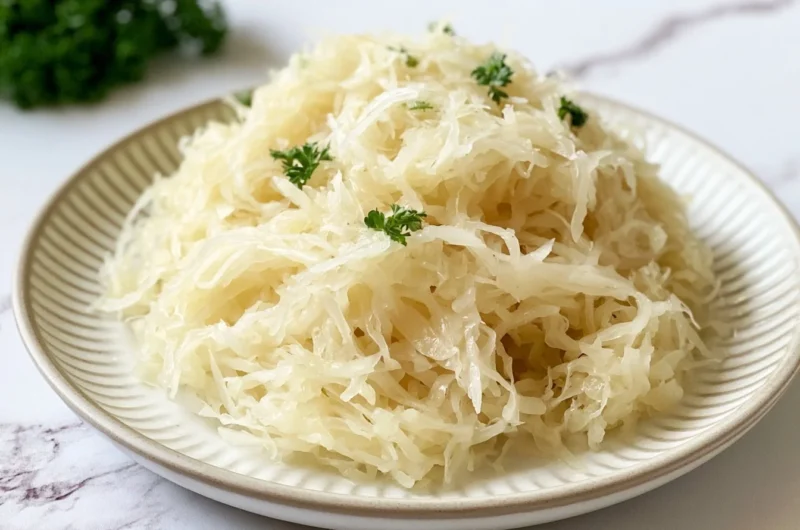
Tangy German Sauerkraut Recipe: A Flavorful Tradition
The sharp tang of fermenting cabbage fills the small kitchen as I prepare to make my first batch of sauerkraut. Memories of my grandmother’s earthy, cozy kitchen drift back to me, where the crunch of crisp cabbage met the simmer of smoky sausages. The ritual of making this delicious staple became a yearly tradition, filling our family’s winter meals with warmth and richness. Today, I want to share not just a recipe but also the joy of crafting your own tangy German sauerkraut. You may also find Crispy Meat Recipes For Dinners useful.
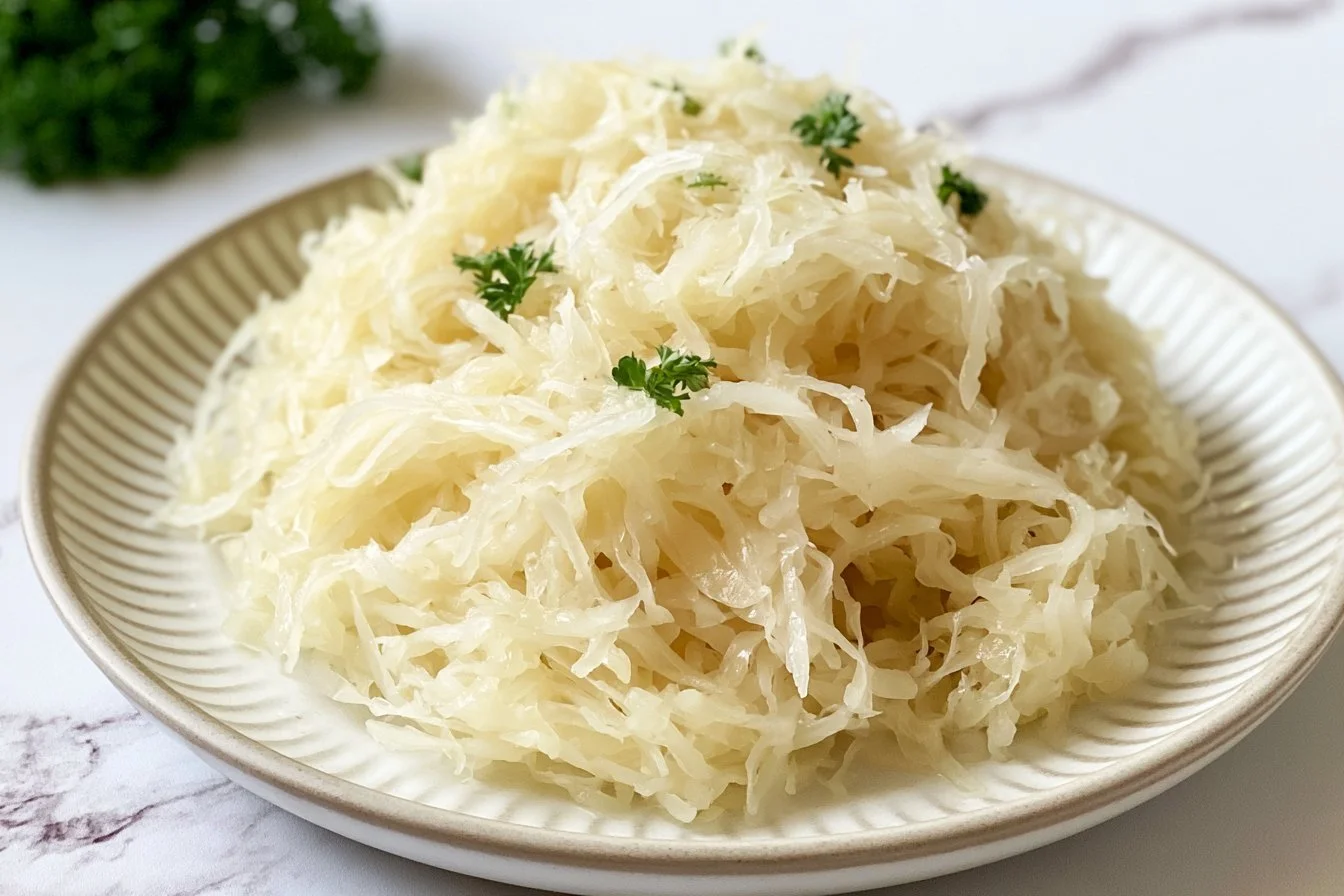
Embracing this centuries-old method of preservation not only enhances your meals but also connects you to a rich cultural heritage. Whether serving it alongside your favorite sausages or incorporating it into hearty dishes, homemade sauerkraut adds a unique depth of flavor that’s hard to replicate with store-bought options. Let’s dive into the art of making tangy German sauerkraut right in your own kitchen. You may also find Delicious Chicken Parmesan Recipe You Need To Try Today useful.
Why you’ll love this tangy German sauerkraut recipe
- Creates a deliciously tangy flavor that enhances any meal, from meats to salads.
- Simple ingredients allow you to create a healthy, probiotic-rich side dish.
- The fermentation process cuts down on waste, stretching your grocery budget.
- An exciting culinary project that allows for creativity and experimentation.
- Perfect for adding a homemade touch to family gatherings or casual dinners.
Ingredients you’ll need
- 2 medium heads of green cabbage (essential for that classic tangy flavor)
- 2 tablespoons of non-iodized salt (helps in drawing out moisture and promoting fermentation)
- 1 tablespoon of caraway seeds (for added aromatic depth)
- Optional: shredded carrots or apples (to introduce a hint of sweetness)
How to make tangy German sauerkraut (step-by-step)
-
Prepare the cabbage: Remove the outer leaves from the cabbage and discard any that are wilted. Cut the cabbage into quarters, remove the core, and slice it thinly into shreds. You may also find Delicious Creamy Lobster Thermidor Recipe For Cozy Nights useful.
-
Combine cabbage and salt: In a large bowl, toss the shredded cabbage with salt. Massage the cabbage with your hands for about 5-10 minutes, until it starts to soften and release its juices.
-
Add spices: Sprinkle in the caraway seeds and mix thoroughly. If you’re using additional ingredients like shredded carrots or apples, add them at this point.
-
Pack the mixture into jars: Transfer the cabbage mixture into a clean, sterilized glass jar or fermentation crock. Pack it down tightly with your fist or a tamper to eliminate air pockets.
-
Add the brine: Ensure the cabbage is fully submerged in its own liquid. If necessary, add a little salted water (1 tablespoon of salt per cup of water) to cover it.
-
Cover and ferment: Seal the jar with a lid but do not tighten it completely, allowing gases to escape. Place the jar in a cool, dark spot and let it ferment for about 1 to 4 weeks, depending on your taste preference.
-
Check periodically: Taste the sauerkraut after the first week. If it’s tangy enough for your liking, transfer it to the fridge to slow down the fermentation.
-
Store: Once you reach your desired flavor, keep the sauerkraut in the refrigerator, where it will continue to develop flavors for several months.
Tips for the best results
- Make sure your jars and utensils are properly sanitized to prevent unwanted bacteria from spoiling the fermentation process.
- Use a food weight or a clean, boiled stone to keep the cabbage submerged in its brine, which helps reduce spoilage.
- Experiment with additional spices, such as garlic or paprika, to personalize the flavor of your sauerkraut.
Common mistakes to avoid
- Not using enough salt: Under-salting can lead to spoilage. Salt is crucial for creating the right environment for fermentation.
- Ignoring the bubbling: Fermentation produces bubbles — if bubbling is nonexistent after a few days, it might indicate an issue. Give it time, and ensure the cabbage remains submerged.
- Storing at high temperatures: Excessive heat can cause your sauerkraut to ferment too quickly and taste off. Aim for a stable, cool temperature.
Variations
- Spicy sauerkraut: Add diced jalapeños or red pepper flakes for a spicy kick.
- Herbed sauerkraut: Mix in fresh dill or fennel for a different flavor profile.
- Apple-cabbage blend: Incorporate tart apple slices for a naturally sweet twist on your recipe.
Storage and reheating
Homemade sauerkraut can be stored in the refrigerator for up to six months. Just keep it sealed tightly to maintain freshness. If you wish to reheat it, do so gently on the stovetop over low heat for no more than a couple of minutes; high heat can ruin its crunch.
Frequently asked questions
- Can I use other types of cabbage? Yes, you can experiment with red cabbage or even Napa cabbage for different flavors and colors.
- How can I tell if my sauerkraut has spoiled? Watch for off smells, a change in color, or the presence of mold on the surface. If any of these occur, discard it immediately.
- Is it necessary to use a fermentation crock? No, a regular glass jar with a loose lid will work just fine for home fermentation.
Final thoughts
Making your own tangy German sauerkraut truly connects you with your culinary roots and offers a satisfying way to preserve the flavors of home. From that first bite of crunchy goodness to the scent of fermentation wafting through your kitchen, it’s a joyful reminder of family traditions and rich history. As the tangy flavor permeates your meals, you’ll find yourself reaching for the jar again and again, celebrating the revival of this age-old dish.
Conclusion
Creating your own tangy German sauerkraut is not only a journey into a time-honored tradition but also a delicious addition to your meals. It’s fascinating to see the transformation from simple cabbage to a complex, flavorful culinary delight. For more variations and techniques, you can explore this helpful guide on How To Make Sauerkraut, or if you’re interested in a delightful soup that features this ingredient, check out German Sauerkraut Soup.